It holds the prestige as one of the most iconic ski runs, not only in the Italian Dolomites, but across all of the Alps. The Olympia delle Tofane piste possesses a storied history and respected tradition, challenging both courageous recreational skiers and fearless world class ski racers.
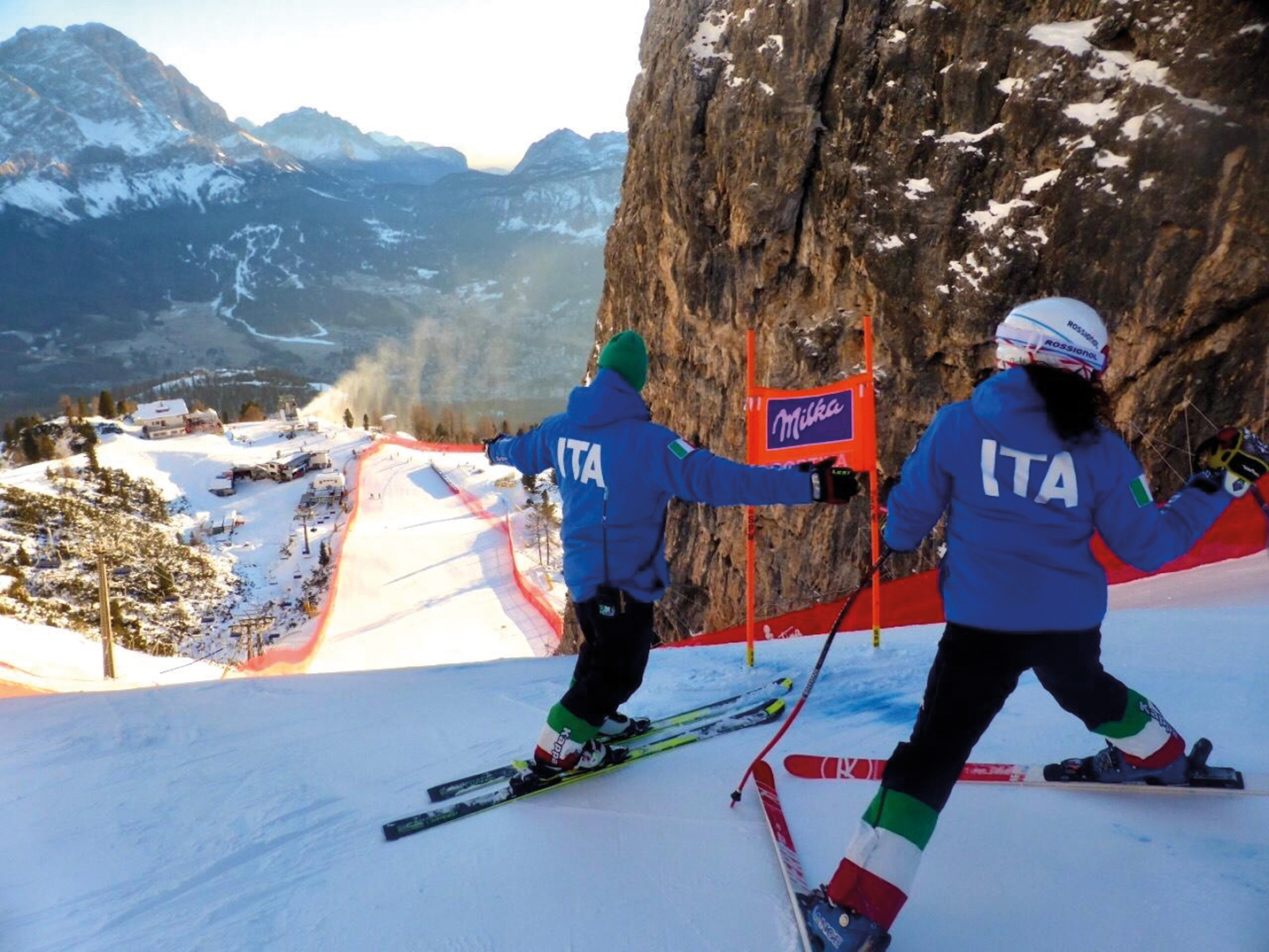
Its signature section – the Tofana Schuss – boasts a 65% gradient, as skiers descend between two colossal rock monuments, enhancing its mystique and difficulty.
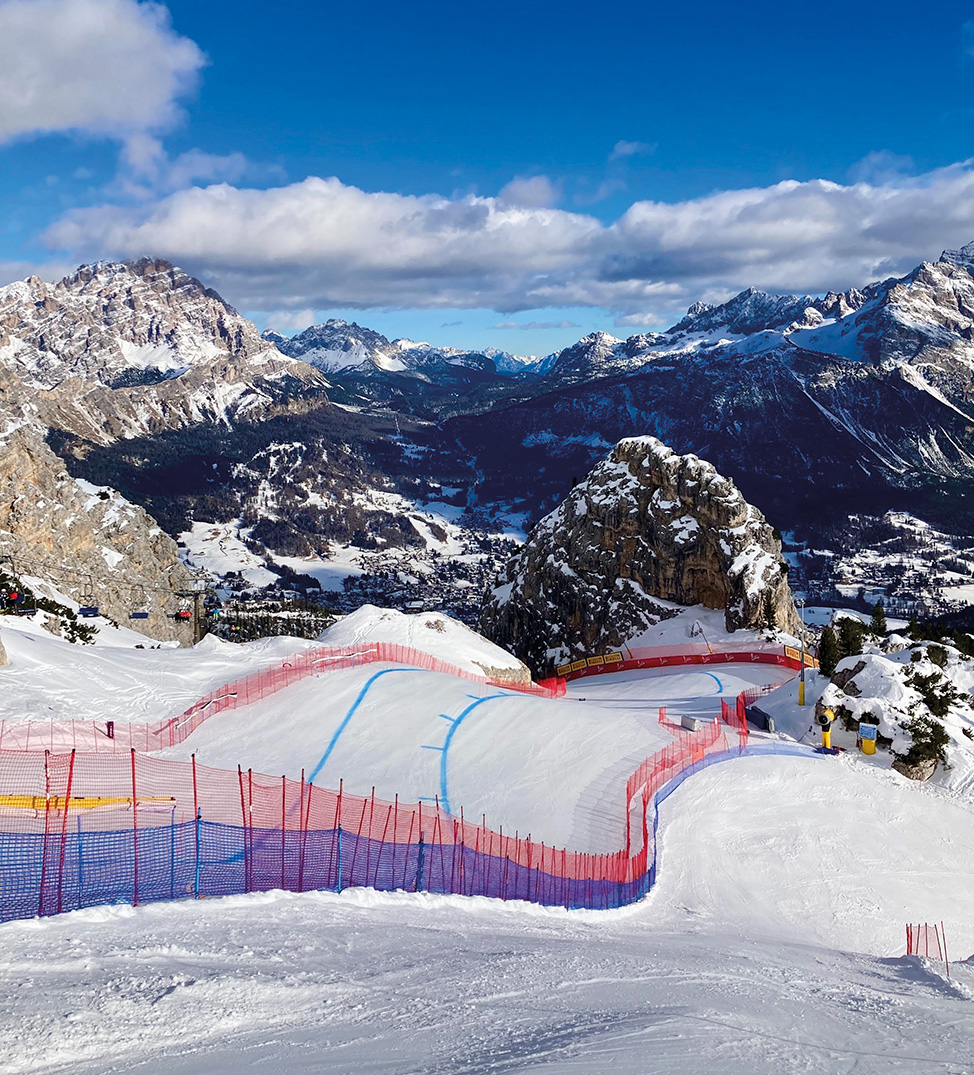
Add mesmerizing views of Cortina, the awe-inspiring Dolomites, and the expansive Ampezzo Valley, and it’s not hard to understand why it is one of the most revered ski slopes anywhere.
Cortina local and former racer Francesco Ghedina has been skiing the Olympia delle Tofane for as long as he can remember. He offers visitors a few quick tips.
“For me, it’s always been home – my advice to skiers is to go skiing really early and beat any lines,” Ghedina tells Cortina Magazine. “Ski for a couple of hours and then have a relaxing lunch – that’s the Italian way to go skiing. It’s all about good skiing, good food, and good times.”
The Olympia delle Tofane, also referred to as the Stratofana Olympica + Schuss, runs roughly 2.4 kilometers in length with 760 meters of vertical drop. The top can be accessed via the Duca d’Aosta – Pomedes Chair Lift, which ascends the right side of the slope.
The world’s fastest female ski racers will once again challenge the steep and twisting piste in February, as they pursue Olympic glory. The women’s Olympic downhill is scheduled as the opening race in Cortina d’Ampezzo, on Sunday, February 8, two days after the Milano Cortina 2026 Olympic Winter Games open. For the brave women pushing their limits, the Olympic course runs approximately 2.6-kilometers in length, as they launch out of a starthouse nestled just below the rocks.
Italian fan favorite and 2018 Olympic champion Sofia Goggia outgunned 53 fellow competitors to win last season’s World Cup downhill. For the veteran racer, it was her fourth victory on the Cortina piste, fortifying her status as an Olympic gold medal favorite.
“For us Italians, it’s always a special place in Cortina, and today I felt like I had my heart in my throat,” Goggia said, after the 2025 win.
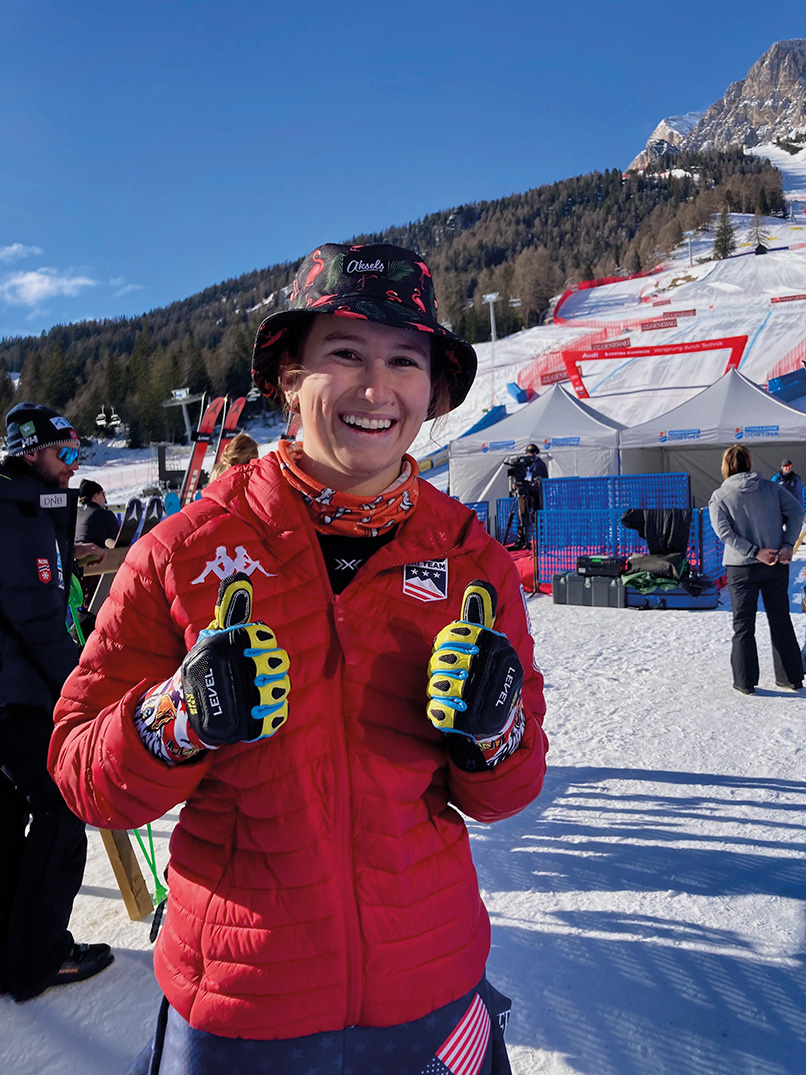
U.S. Ski Team rising star Lauren Macuga – who is seeking her first Olympic Games – elaborated upon what she loves about the piste.
“It’s a very playful track and the terrain is always moving, which is so fun,” said Macuga. “It’s so cool getting to jump through the Tofana Chute and then coming straight down into the Daytona turn. It’s really unique how everything keeps moving.”
Olympic ski racing history on the Olympia delle Tofane dates to the Cortina 1956 Winter Games when Austrian legend Toni Sailer won a downhill gold medal on the same run still used today.
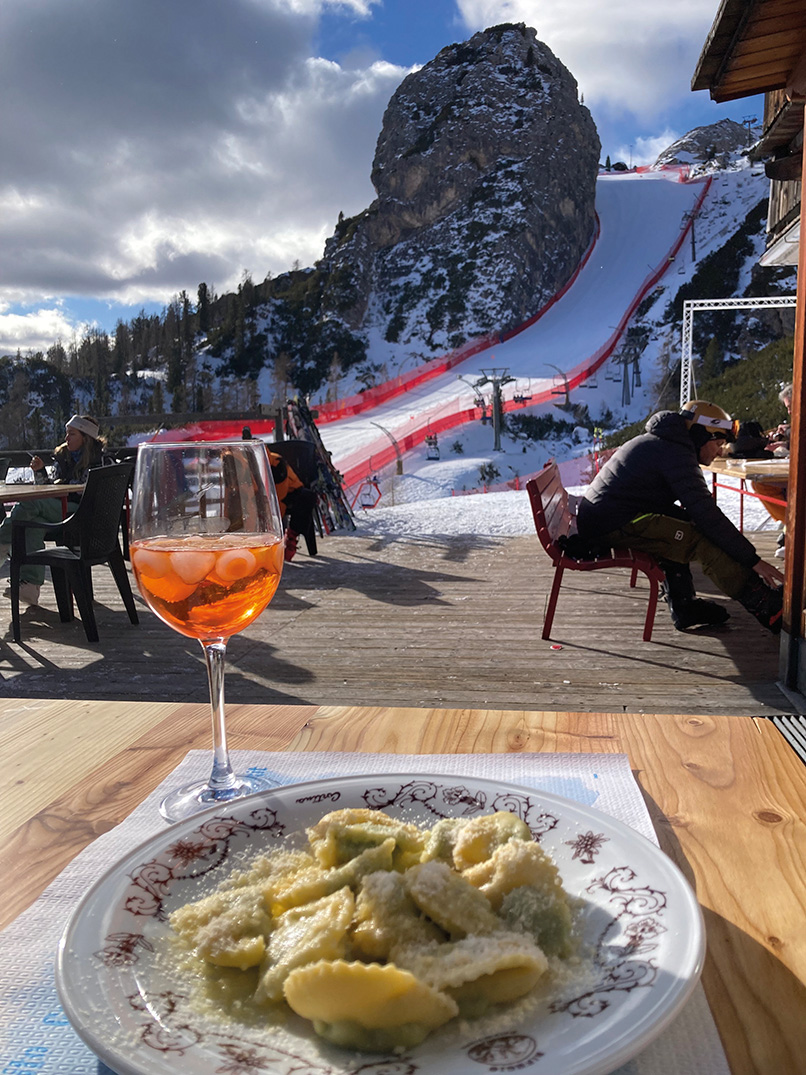
For those skiers not necessarily seeking a lightning-fast time, but rather to enjoy a leisurely day, the slope offers additional options for enjoyment, notably a visit to either of its two inviting Rifugios – Pomedes and Duca d’Aosta. Pomedes can be found skier’s right near the top of the trail, while Duca d’Aosta is perfectly situated with a spectacular view gazing up at the Tofana Schuss, on skier’s left.
NBC News Correspondent Stephanie Gosk visited Cortina last winter and skied the piste for an Olympics one-year-to-go story. This writer had the honor of skiing alongside and showing Stephanie the steep and spectacular run.
“It is simply the most dramatic ski run that I’ve been on in my life,” said Gosk, immediately after descending the Schuss. “The beauty of this spot and this location – the fact that this will be highlighted during the Olympics is truly incredible.”
I asked Stephanie if her adrenaline was pumping, to which she asserted: “Absolutely, that is steep. But the snow was good, so that helps.”
So, while most of us will never achieve Olympic stardom charging down Cortina’s famous piste at top speed, it is highly recommended to descend at one’s own pace, allowing time to savor every moment. Taking a break at either Rifugio for a morning cappuccino or chilled Aperol Spritz to sip in the sun is not a bad idea either.
L’Olympia delle Tofane Piste di Cortina colpisce e ispira
Considerata una delle piste più iconiche non solo delle Dolomiti ma di tutto l’arco alpino, l’Olympia delle Tofane unisce storia, tradizione e tecnica, sfidando sia sciatori amatoriali, sia campioni mondiali. Il tratto simbolo, il Tofana Schuss, presenta una pendenza del 65% e scende tra due imponenti pareti rocciose, accrescendo fascino e difficoltà. Alle sfide tecniche si aggiungono vedute spettacolari su Cortina, sulle Dolomiti e sull’ampia conca d’Ampezzo, elementi che spiegano la fama mondiale della pista. Il cortinese ed ex atleta Francesco Ghedina, che conosce la pista fin da bambino, racconta che per lui è sempre stata come casa e consiglia agli sciatori di partire molto presto per evitare code, sciare qualche ora e poi concedersi un pranzo rilassante, spiegando che questo rappresenta lo stile italiano dello sci: qualità delle piste, buon cibo e divertimento. L’Olympia delle Tofane, nota anche come Stratofana Olimpica + Schuss, si sviluppa per circa 2,4 chilometri con 760 metri di dislivello e la partenza è raggiungibile tramite la seggiovia Duca d’Aosta-Pomedes, che sale sul lato destro del tracciato. A febbraio la pista tornerà protagonista con la discesa olimpica femminile, gara inaugurale dei Giochi di Milano Cortina 2026, con un percorso di circa 2,6 chilometri che parte poco sotto le rocce. La campionessa italiana Sofia Goggia, vincitrice di quattro gare a Cortina, ha sottolineato che per gli italiani la pista resta sempre speciale e ha raccontato di aver provato forte emozione dopo il successo del 2025. La statunitense Lauren Macuga ha invece spiegato di amare la varietà del tracciato, dove ogni curva e salto mantengono alta l’adrenalina, ricordando come particolarmente emozionante il Tofana Chute che conduce alla curva Daytona. La storia olimpica della pista risale ai Giochi del 1956, quando l’austriaco Toni Sailer vinse l’oro nella discesa proprio sullo stesso percorso. Chi preferisce una sciata più tranquilla può godersi soste nei rifugi Pomedes, vicino alla parte alta della pista, o Duca d’Aosta, con vista spettacolare sullo Schuss. La giornalista di NBC News Stephanie Gosk, dopo aver sciato in pista per un servizio sull’avvicinamento alle Olimpiadi, ha dichiarato che si tratta della pista più scenografica che abbia mai affrontato e ha confermato di aver provato molta adrenalina, pur con la neve in ottime condizioni. Pur senza aspirare alla velocità olimpica, scendere a proprio ritmo, assaporando ogni momento e concedendosi una pausa al sole con cappuccino o Aperol Spritz rimane un’esperienza indimenticabile, capace di far vivere appieno lo spirito delle Dolomiti e dello sci italiano.